Developmental Dysplasia of the Hip (DDH)
AI-powered screening from ultrasound (Graf) or X-ray. Modality is detected automatically — no manual selection. Best results for infants 0–6 months; applicable up to 12 months.
Research tool — not a regulated medical device. Their results are not a diagnosis and can be wrong. Every result must be reviewed by a qualified clinician, who remains responsible for the clinical decision.
The same tool runs both Graf ultrasound and pelvic X-ray pipelines. When you run it from the PACS worklist, we automatically choose the correct pipeline (DICOM Modality when available; otherwise image layout). The detected modality is shown next to the results.
What it does
Assesses developmental dysplasia of the hip — Graf alpha/beta angles on infant hip ultrasound, or the acetabular index on a pelvis X-ray — and flags dysplastic hips.
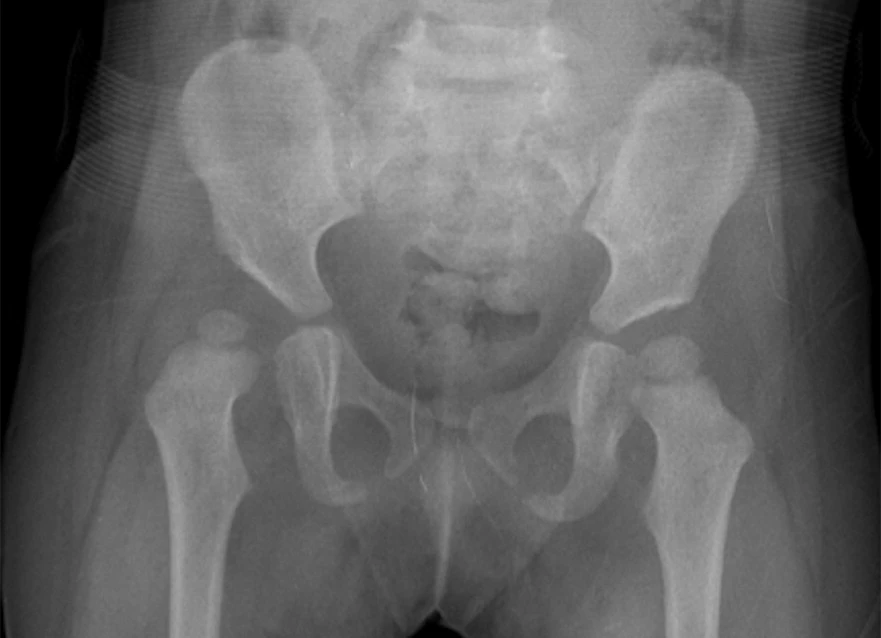
AI result

Acetabular index (L / R)
34.7° / 28.3°
IHDI grade (L / R)
2 / 1
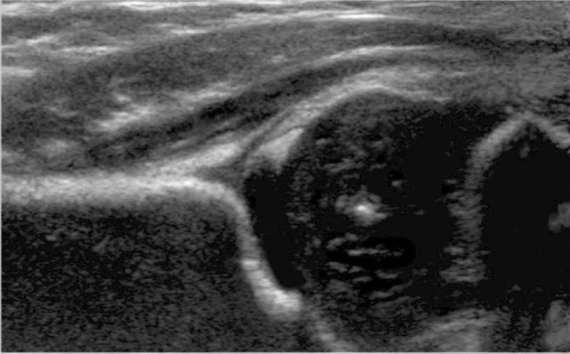
AI result

Alpha angle (Graf)
52.9°
Type IIa/b
Femoral head coverage
53.5%
What is DDH?
Developmental Dysplasia of the Hip (DDH) is a condition where the hip joint does not develop properly — the femoral head is partially or completely displaced from the acetabulum (hip socket). If untreated, DDH leads to abnormal gait, pain, and early-onset arthritis.
Early detection is critical. Universal ultrasound screening at 4–6 weeks of age is recommended in many countries. X-ray becomes informative after ossification centers appear (~4 months).
- Ultrasound (Graf method) — gold standard for infants 0–6 months. Measures Alpha angle and femoral head coverage.
- X-Ray — used after 4–12 months. Measures ACE angle, Wiberg index, Tonnis grade, IHDI.